Drafting Petitions With AI: Where It Helps and Where Judgement Still Matters

A junior advocate in Chennai is staring at a blank screen at 11 PM. The principal wants a draft plaint by morning for a specific performance suit, the facts are layered, and the cause of action paragraph alone has been rewritten four times. He opens an AI tool, pastes the facts, and asks for a first draft. Forty seconds later, he has eight pages of reasonably structured pleading on screen. It is not what he will file. But it is no longer a blank page either, and that single shift has changed his night.
This scene is now playing out in chambers across India. AI has entered the drafting workflow, often quietly, sometimes with hesitation, increasingly with confidence. The honest question is no longer whether advocates will use AI for drafting. It is how to use it well, so that the gains are real and the work stays unmistakably yours.
The Core Opportunity
Drafting Is Where the Hours Go For most litigating advocates in India, drafting consumes more hours than any other single activity. A well-prepared plaint under Order VII of the CPC, a careful written statement under Order VIII, a reply to an interim application, a rejoinder, a petition under Article 226 or 227, a complaint under Section 138 of the NI Act, an appeal memorandum - each of these is a precise document that has to comply with procedural requirements, state the cause of action properly, set out the relief sought with specificity, and survive the scrutiny of both opposing counsel and the bench.
It is also the area of practice where small structural improvements compound the fastest. An hour saved on a routine petition is an hour returned to argument, client counsel, or the next matter. Multiply that across a chamber's monthly drafting load, and the productivity gain from AI is not theoretical. It is the most immediate, most measurable improvement available to a litigation practice today, as long as the work is set up so the tool handles the lift and the advocate keeps the lead.
What This Actually Looks Like in Practice
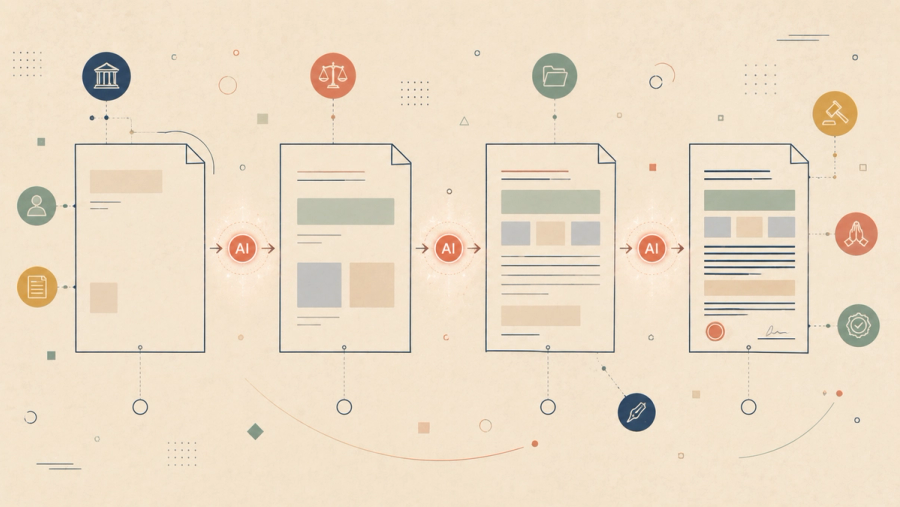
Where AI Genuinely Helps AI is at its strongest in drafting when it is removing the friction of starting and structuring. Given a clear factual narrative and the type of pleading required, current AI tools can produce a competent first draft of standard documents in minutes. A consumer complaint, a Section 138 NI Act notice and complaint, a routine eviction petition, a stay application, a Section 80 CPC notice, a legal notice - these are documents with well-established structures, and AI handles the scaffolding cleanly.
AI also helps significantly with reformatting. Converting a long client narrative into a structured statement of facts. Turning a rough outline of grounds of appeal into a properly numbered memorandum. Producing a chronological list of dates and events from a scattered file. These are tasks where the cognitive load is in organization rather than judgement, and where AI saves a junior advocate hours of mechanical work each week.
Iteration is where the biggest day-to-day gains live. Once a draft exists, asking the tool to tighten paragraph three, expand the prayer clause, or rewrite an averment in more formal register is far faster than doing it manually. The advocate stays fully in control of the substance while offloading the keystrokes. Over a month, this is the difference between leaving chamber at 8 PM and leaving at 10 PM.
Where Your Judgement Still Leads The most useful way to think about AI in drafting is as a fast, tireless junior who works on scaffolding while the advocate handles the substance. That framing makes it clear where the advocate's value still sits.
Citations are the first place where judgement is non-negotiable. Generic AI tools can produce plausible-looking case names with plausible-looking citations, but those references need to be verified against the SC e-SCR, the High Court portals, or established law reports before they go anywhere near a filing. This is not a flaw to fear, it is simply the reason why citation verification belongs in the chamber's workflow as a standard step, not as a hopeful afterthought. The right AI tools, built on real Indian case law, remove most of this concern at the source. The wrong ones make verification essential.
Local procedure is the second place where judgement leads. Indian pleading practice has rich local conventions. A plaint framed for the Bombay High Court Original Side reads differently from one framed for a Delhi district court. The Madras High Court has its own writ conventions. Karnataka has its own. AI provides the structural draft, but the advocate's familiarity with the forum is what tunes it to land cleanly in front of a specific bench.
Strategy is the third, and the most important. The decisions that determine how a matter unfolds for years afterwards are not in the language. They are in what to plead and what to leave for evidence, what to admit and what to deny, which reliefs to seek and in what order, when to be specific and when to keep latitude. These are decisions only the advocate can make, because only the advocate sees the long arc of the case. AI accelerates everything around these decisions. The decisions themselves remain firmly the advocate's.
How ArgDay Fits Into This ArgDay's drafting features are built around exactly this division of work. The advocate leads on substance and strategy. The system handles the lift underneath.
Drafts are grounded in the actual matter, not in a generic prompt. Parties, dates, court history, uploaded documents, and hearing notes already in the chamber file become the source material, so the AI is working with the real facts of the case rather than reconstructing them from scratch. Citations surfaced by the system come from real Indian case law sources, which removes the verification anxiety at the most important point. Templates are structured around Indian pleading conventions for common petition types - Section 138 complaints, consumer complaints, eviction petitions, writ petitions, appeal memoranda - so the scaffolding starts in the right shape for the forum the chamber actually appears in.
The result is a drafting workflow where the junior advocate's evening hours are returned to them, the principal advocate's review focuses on substance rather than structure, and the chamber as a whole moves through its drafting load with the calm of a system that is working with it rather than against it.
Getting Started Without Disrupting Your Drafting First, pick the categories of drafts where AI delivers the cleanest win, and start there. Documents with well-established structures - Section 138 notices and complaints, consumer complaints, routine interim applications, standard legal notices, basic eviction petitions - are the ideal starting point. The structure is settled, the variations are manageable, and the time savings are immediate and visible.
Second, treat the first AI draft as a junior's draft. Read it line by line, verify the citations, check the procedural references, refine the language to match the forum, and bring your strategic lens to the cause of action and the prayer. The chambers that get the most out of AI are the ones that have built this review habit early, so it becomes second nature rather than an extra step.
Third, build the chamber's own template library on top of the AI workflow. As each pleading is finalized, the strongest versions can become the starting point for the next similar matter. Over a few months, this turns the chamber's collective drafting experience into an asset that the whole team can draw on, rather than knowledge locked in one senior's head.
The Bigger Picture Drafting is the work where Indian advocates spend the most hours, and it is the work where thoughtful use of AI delivers the most visible gain. The chambers that get this right are not the ones that adopt AI fastest. They are the ones that adopt it with a clear sense of where the tool leads and where the advocate leads, building a workflow where each does what each does best. The next decade of Indian litigation will be defined less by which chambers used AI and more by which chambers used it well. The advocates who shape that workflow now will spend the rest of their careers with hours of their week returned to the work that drew them to the profession in the first place.
ArgDay is AI-powered case management software built for Indian advocates. Draft faster, manage matters, and prepare for court - all in one place.
Ready to try ArgDay?
AI-powered case management for Indian advocates.
Get started free