
Why Most Advocates Miss Hearings - And How to Fix It
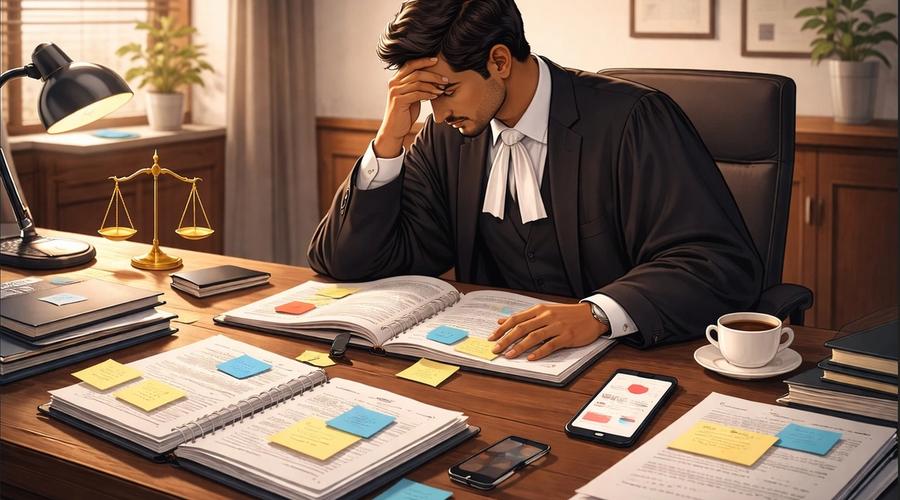
It happens more often than anyone admits.
A matter comes up on a date you had noted somewhere - a diary, a sticky note, maybe a WhatsApp message you saved. But that morning, you're already at court for another case, your phone has 47 unread messages, and somewhere in that noise, the reminder never came.
You didn't miss the hearing because you're careless. You missed it because the system most advocates use to track dates was never built to handle a practice of 30, 50, or 100 active cases.
Let's talk about why this happens - and what actually fixes it.
The Real Reason Hearings Get Missed
Most advocates track dates in one of three ways: a physical diary, a spreadsheet, or their memory. Some use all three, which creates its own problem - three different places to check, three chances for something to fall through.
The physical diary works until it doesn't. You're in court and your junior writes the next date in their own notebook. The spreadsheet works until someone forgets to update it. Memory works until it doesn't - and when it doesn't, the consequences are serious.
There's also the adjournment problem. A case adjourned to a new date means updating every record you have - the diary, the spreadsheet, the team WhatsApp group, and reminding yourself two days before. That's five manual steps for a single adjournment. Multiply that across 40 cases in a month and you have 200 manual updates a year just to keep your dates accurate.
This is not a discipline problem. It's a systems problem.
What a Missed Hearing Actually Costs
Beyond the professional embarrassment, a missed hearing can mean:
- The opposing party gets an ex-parte order
- The court dismisses your client's petition for non-prosecution
- You have to apply for restoration - which takes time, money, and your client's trust
- In some cases, the damage to the client's matter is irreversible
Your client doesn't know about the complexity of managing 80 active matters. They know one thing: you weren't there when it mattered.
The Fix Is Not a Better Diary
Switching from a paper diary to Google Calendar is not the answer. The problem isn't the format - it's that all of these tools require you to manually maintain them, and they have no connection to your actual case load.
When you adjourn a case, Google Calendar doesn't know. When a new hearing is added in your team, nobody gets automatically notified. When you have 3 matters on the same day at different courts, there's no system that flags the conflict.
What actually works is a case management system where dates live inside the case itself - not in a separate calendar that gets out of sync.
Here's what that looks like in practice:
- You create a case once and set the first hearing date
- Every time there's an adjournment, you update the date in the case record
- The system automatically tracks what's coming up across your entire case load
- You get a reminder the evening before and the morning of - automatically
No manual updates to a separate calendar. No reminder you have to set yourself. The date is in the case, and the case knows when to alert you.
The WhatsApp Problem
Most advocates currently rely on WhatsApp for reminders - either they set reminders to themselves, or their clerk messages them the night before. This works until:
- The clerk forgets
- You mute the group and miss the message
- You're in the middle of another matter and don't see it until it's too late
WhatsApp is a communication tool. It was not designed to be a legal calendar. Using it as one means one human has to remember to remind another human - and that chain breaks constantly.
The better approach is automated reminders tied directly to your case dates. When a hearing is scheduled for tomorrow, a WhatsApp message goes to your phone automatically - without anyone having to remember to send it. Case name, court, purpose, timing - all in the message.
No clerk dependency. No chance of a missed message in a busy group.
For Firms and Teams
The missed hearing problem is worse in teams. Individual advocates can at least keep their own dates in their head to some extent. In a firm where multiple advocates share cases, matters get handed off, and juniors handle adjournments - the chances of a date falling through multiply with every person in the chain.
A team needs a single source of truth. One place where every case's hearing dates live, every team member can see what's coming up, and updates are reflected immediately for everyone.
When your junior updates an adjournment date at court, you should see it before you get back to the office - not after you've already scheduled something else on that day.
A Simple System That Works
Here's a practical setup that eliminates most missed hearings:
- Every case in your practice gets a digital record - case number, court, parties, and the next hearing date
- When a hearing date changes, update it in the case record immediately - not later, not tonight, right then
- Set up automatic WhatsApp reminders for every hearing - one the evening before, one the morning of
- Review your upcoming hearings every Monday morning as a weekly habit - not to find surprises, but to confirm there are none
This takes about 10 minutes a week to maintain once it's set up. The system does the heavy lifting.

The Bottom Line
Missing hearings is not inevitable. It's the predictable result of tracking critical dates in tools that weren't built for the complexity of an active legal practice.
The advocates who never miss hearings aren't more disciplined than everyone else. They have better systems.
ArgDay is built around exactly this - your cases, your hearing dates, and automatic WhatsApp reminders that go out without you having to do anything. If you manage more than 10 active matters, it's worth 10 minutes to set up.
Start free at argday.com - no credit card required.
Ready to try ArgDay?
AI-powered case management for Indian advocates.
Get started free