
Why Your Chamber's Diary Is Costing You Cases (And Clients)

It is 9:40 PM on a Tuesday. You are back in chamber after a long day at the district court, flipping through your diary to figure out tomorrow's board. Three matters in the trial court, one mention in the High Court, and somewhere in the margins, a scribbled note about a client who was supposed to bring an affidavit yesterday. You cannot remember if he came. Your junior thinks he did, but the document is not in the file. The next date in that matter is in eleven days, and the affidavit was meant to be filed before the reply. You make a mental note to call him in the morning. You will forget by 8:30 AM, because tomorrow has its own diary entries demanding attention.
Every Indian advocate knows this evening. The diary is not the problem in itself. The problem is what the diary cannot do.
The Core Problem
A System Built for a Smaller Practice The leather-bound diary, the chamber register, and the junior's notebook are inherited from a time when an advocate handled thirty matters, appeared in two or three courts, and saw clients who lived within ten kilometers of the chamber. That world is gone. A mid-sized litigation practice in any metro now juggles a hundred matters or more, spread across trial courts, district courts, the High Court, tribunals, consumer forums, and increasingly virtual hearings on different platforms. Filings happen through eCourts, the High Court e-filing portal, and physical counters depending on the bench. Clients arrive over WhatsApp, expect updates by EOD, and disappear when fees are due.
The diary cannot search. It cannot remind. It cannot sync between you, your junior, and your clerk. It cannot tell you that the limitation period under Article 137 is closing in nineteen days on a matter you onboarded three months ago. It cannot flag that a CPC Order VIII deadline for written statement has lapsed because the next date got adjourned twice. It just sits there, faithfully recording what you wrote down, and silently failing at everything you did not.
What This Actually Looks Like in Practice
Missed Dates and Lapsed Limitations The most painful failures are the quiet ones. A revision petition that should have been filed within ninety days gets pushed because the diary said "draft pending" but nobody tracked the actual limitation date. A Section 138 NI Act complaint where the thirty-day window under Section 142 closes while the client is still being chased for documents. An appeal where the certified copy was applied for but never collected, and the limitation under the Limitation Act runs out. These are not hypothetical. They are the matters that turn into Bar Council complaints and professional indemnity claims.
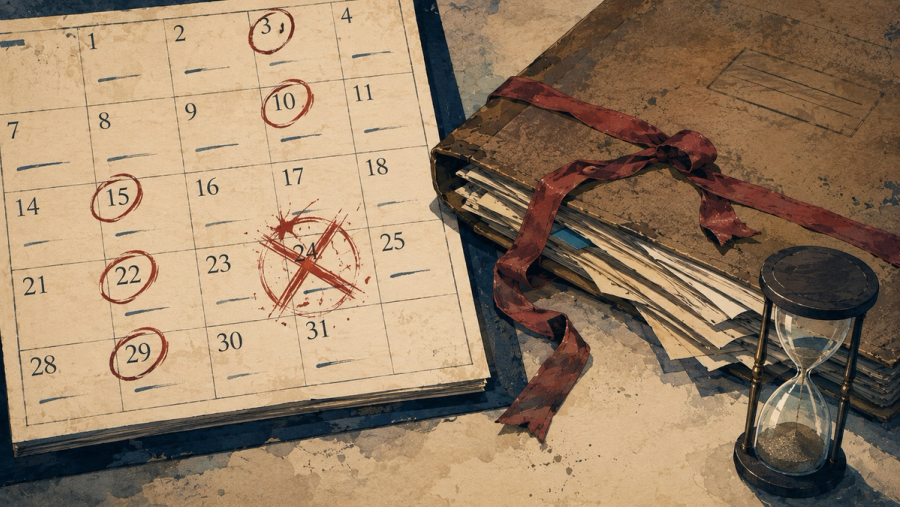
Junior Advocate Handoffs That Lose Information When a junior appears for you because you are stuck at another court, the briefing usually happens in the car or over a hurried phone call. The diary tells the junior the matter number and the next date. It does not tell them the last three orders, what the judge said about the relief sought, which witness is yet to be examined, or that opposing counsel hinted at a settlement. That context lives in your head, your file, your phone, your junior's notes, and occasionally on WhatsApp. When it does not transfer cleanly, the matter suffers in front of the bench.
Client Trust Eroding in Small Ways Clients in India have changed. The Bangalore IT professional with a property dispute, the Mumbai promoter facing IBC proceedings, the Hyderabad businesswoman with a cheque bounce file - they expect responsiveness. When a client asks "what happened today in my matter" and you cannot answer for six hours because you have not opened the diary yet, trust erodes. When the next date is wrong because the clerk wrote it down differently from what the court master announced, trust erodes faster. Clients rarely complain. They just stop referring others, and eventually move to a chamber that gives them a portal login and a same-day update.
What Technology Cannot Replace Be honest about this part. No software replaces the instinct that tells you a judge is in a foul mood and your application should be moved tomorrow instead. No tool replaces the relationship with the court clerk who lets you know informally that the matter has been adjourned before it shows up on the cause list. No system writes the opening line of a cross-examination or reads the bench the way thirty years of practice does. The diary, at its best, is an extension of memory and judgement - and judgement is not what is failing. Capacity is.
The argument is not that advocates need to be replaced by software. It is that the parts of practice that are pure record-keeping, deadline-tracking, document-fetching, and status-updating should stop consuming the hours that belong to argument, strategy, and client counsel.
How ArgDay Fits Into This ArgDay is built for exactly this gap. It pulls case status and next dates directly from eCourts, High Court portals, and tribunal sites, so the diary updates itself instead of waiting for the clerk to copy it down. It tracks limitation periods against the cause of action, not against guesswork, and warns the chamber well before a deadline becomes a crisis. Junior advocates and clerks see the same matter view you do, with order sheets, uploaded pleadings, and notes from the last hearing in one place, so a handoff takes two minutes instead of twenty. Clients get clean, professional updates after each hearing without the chamber having to draft each one from scratch.
The point is not to replace how an Indian advocate practices. It is to remove the administrative drag that the diary was never designed to carry at modern volumes.

Getting Started Without Disrupting Your Practice First, audit one week of your diary honestly. Mark every entry that was missed, late, wrongly noted, or duplicated. Most advocates are surprised by what they find. The number is rarely zero.
Second, pick one practice area or one set of matters - say, all your Section 138 files, or every matter pending in one specific court - and migrate just those into a proper case management system. Do not boil the ocean. Run the new system parallel to the diary for a month and watch where each one fails.
Third, bring your junior and clerk into the system before yourself. They handle most of the data entry already; they just do it in scattered places. Centralizing their work is the fastest way to reclaim the evenings you currently spend reconciling notebooks.
The Bigger Picture Indian legal practice has always rewarded preparation, discipline, and memory. The diary was the tool that supported all three for generations. It is not failing because advocates have become less capable. It is failing because the volume, speed, and complexity of modern practice have outgrown what any paper system can carry. The chambers that will define the next decade are not the ones with the thickest diaries. They are the ones that freed their advocates from the diary entirely, and let them spend those reclaimed hours on the work that actually moves matters forward.
ArgDay is AI-powered case management software built for Indian advocates. Track hearings, manage limitations, and prepare for court - all in one place.
Ready to try ArgDay?
AI-powered case management for Indian advocates.
Get started free